JAPAN
PANORAMA GINZA
6 Days / 5 Nights — Japan Alps
A high-alpine traverse along one of Japan’s most iconic ridgelines, where sharp granite peaks, mountain huts, and endless horizons define the rhythm of each day.
The Panorama Ginza route follows a dramatic ridgeline through the heart of the Northern Japan Alps, linking some of the country’s most beautiful mountain huts and peaks. This journey is defined by long days above the clouds, ever-changing alpine scenery, and a rhythm shaped by sunrise breakfasts and early evening lights-out.
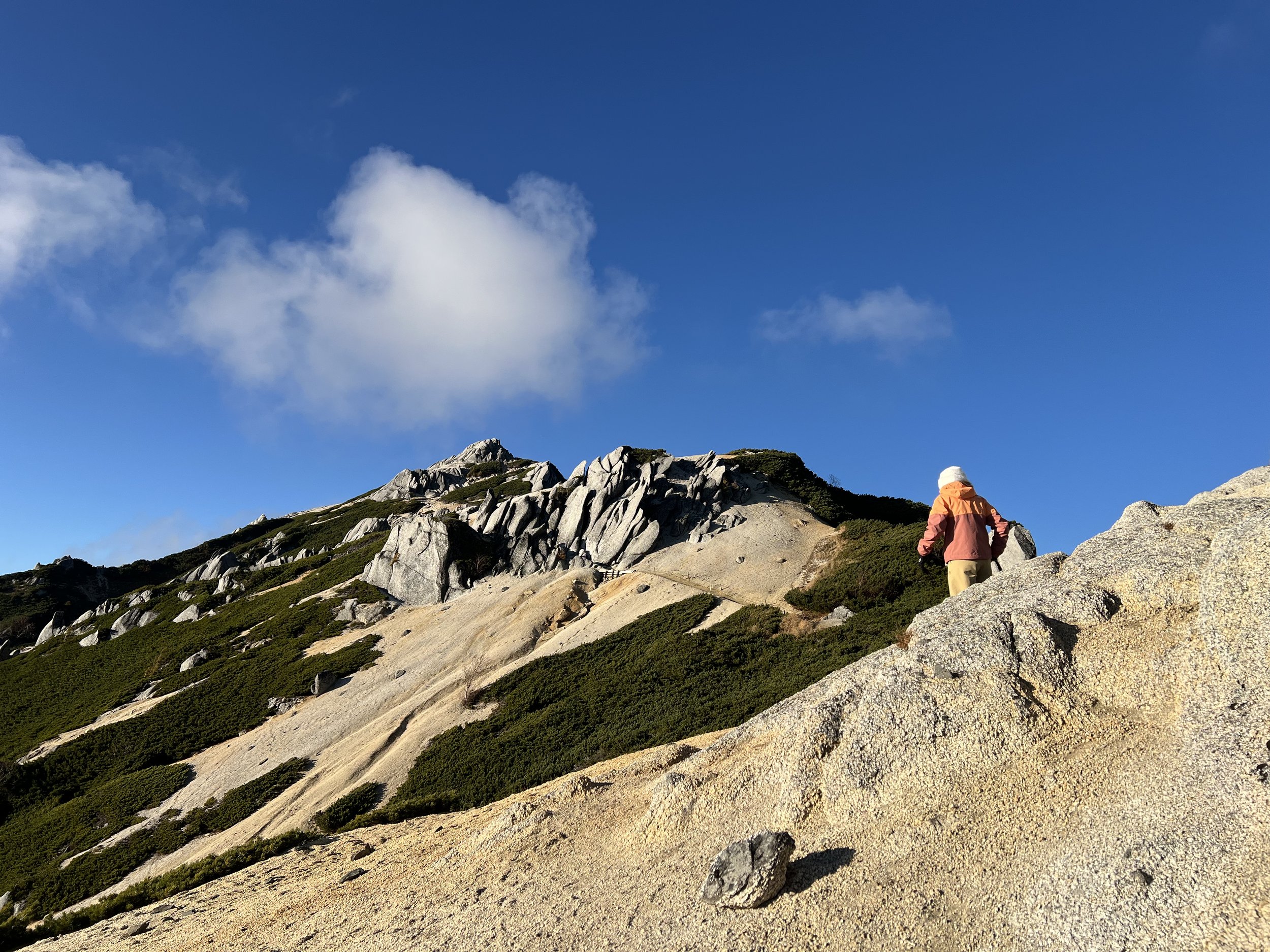
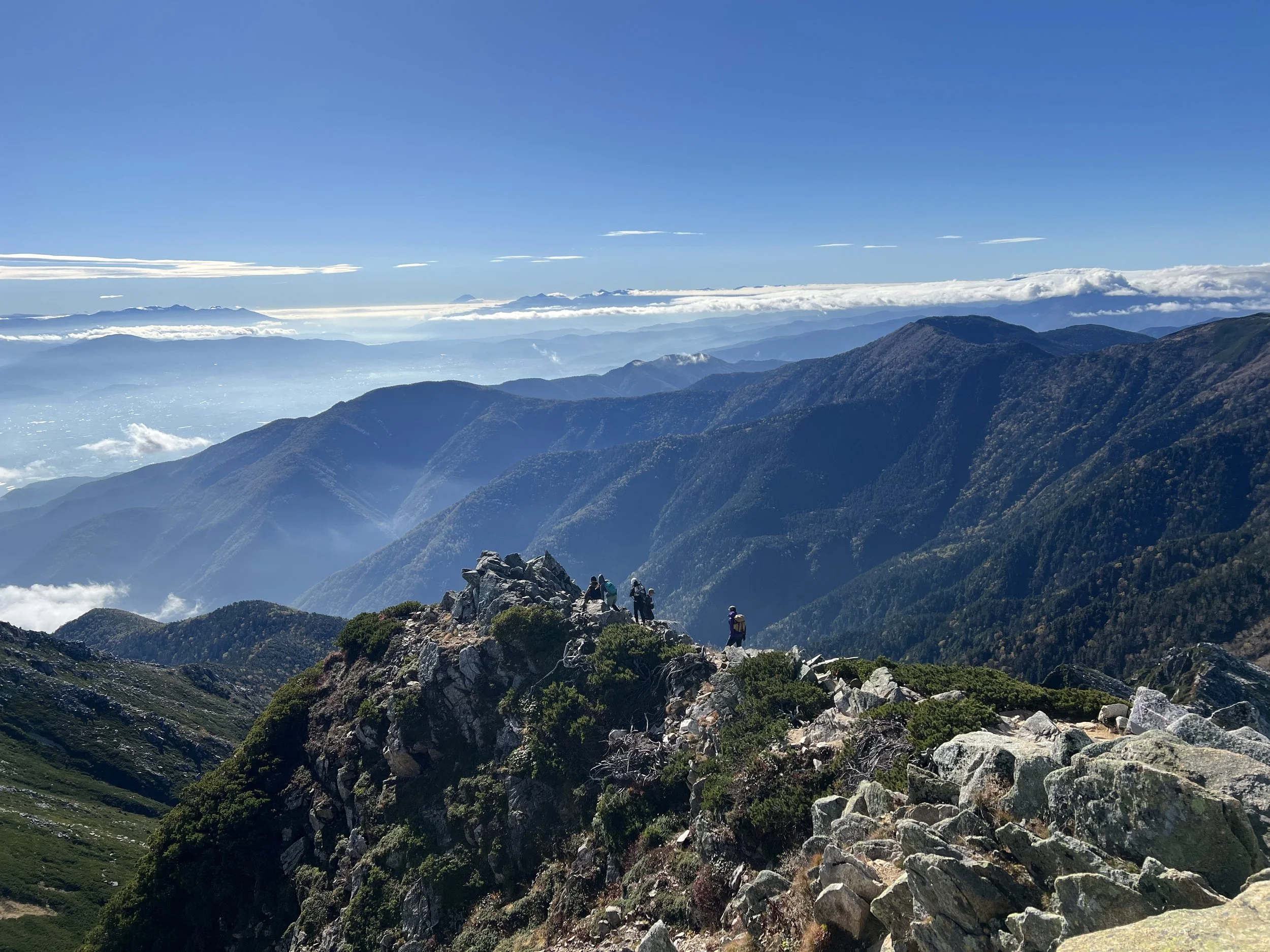
Rather than remote camping, nights are spent in classic Japanese mountain huts—simple, communal, and rich in hiking culture. Each day brings a new perspective: sharp granite spires, deep valleys carved by glaciers, and wide-open views stretching across the Alps.
This trek is ideal for experienced hikers seeking a refined alpine adventure—physically demanding, deeply scenic, and grounded in Japan’s unique mountain traditions.
Trip Overview
Duration: 6 Days / 5 Nights
Difficulty: ★★★⭑☆ (3.5 / 5) — Moderate–Challenging
Trekking Style: Guided ridge trek · Mountain huts · Self-carry
• Experienced hikers comfortable with multi-day alpine terrain
• Travellers able to carry their own backpack
• Those who enjoy structured days and early startsAccommodation: Mountain huts
Season: July – October
Suitable for experienced trekkers comfortable with physical challenge and basic camping conditions
What Makes This Trek Special
One of Japan’s most iconic alpine ridge routes
Continuous high-altitude views day after day
Authentic mountain hut experience
Well-marked trails with a strong sense of wilderness
A perfect balance of challenge, culture, and comfort
Camping Style
Accommodation is in traditional Japanese mountain huts along the Panorama Ginza route. Huts are shared dormitory style with futon bedding and limited personal space. Facilities are clean, well-managed, and designed for efficiency rather than comfort. Dinner is served early in the evening, and lights are typically out by 20:00 to allow for early alpine starts. All hut payments must be made in cash.
Food
Breakfast and dinner are provided at the mountain huts and served at fixed times. Meals are simple, warm, and designed to refuel hikers for long days—often including rice, soup, vegetables, and protein.
Lunches are self-catered and eaten on the trail. Most huts sell snacks, instant noodles, and drinks, but selection can be limited and prices are higher due to altitude and transport costs.
Hut payments are cash only.
Facilities
Toilets are available at all huts, though facilities are basic. Charging points are extremely limited and shared among many hikers; bringing a power bank and USB cable is essential. Water is available at huts, but it may need to be purchased or rationed.
Trail Conditions
The Panorama Ginza follows well-established alpine trails, but the terrain is physically demanding. Expect steep ascents, long ridgeline walks, rocky paths, and narrow or exposed sections. Some parts require careful foot placement, especially in wet, windy, or foggy conditions. Trekking poles and sturdy hiking footwear are strongly recommended.
Experience Level
This trek is suitable for hikers with prior multi-day trekking experience. Participants should be comfortable carrying their own pack, hiking for 6–7 hours per day, and managing fatigue over consecutive days. Confidence on uneven and exposed terrain is important.
Weather & Environment
Mountain weather in the Japanese Alps can change quickly. Conditions may include cold mornings, strong winds on ridges, sudden fog, rain, or intense sun. Temperatures drop rapidly in the evening. Clear days offer wide panoramic views, while poor weather requires patience, adaptability, and good layering.
Pack Weight
Participants carry their own backpack, typically weighing 8–12 kg. This includes clothing layers, rain gear, water, snacks, personal items, and trail lunches. No porters are available on this trek, so thoughtful packing is essential.
Respect for Nature
The Japanese Alps are a protected and sensitive alpine environment. Stay on marked trails to prevent erosion, carry out all rubbish, and follow hut rules. Keep noise to a minimum, respect fellow hikers, and practice Leave No Trace principles throughout the journey.
Trip Itinerary
-
Arrive in Tokyo and travel independently by JR train to Matsumoto, the gateway to the Japan Alps. After check-in, enjoy free time to explore the historic town, visit local museums, or sample regional cuisine.
Overnight: Hotel in Matsumoto
Meals: – -
We meet early and travel by train and bus to Nakabusa Onsen. From here, the trail climbs steeply through forest toward the alpine zone. As elevation increases, the landscape opens to dramatic granite formations and wide views.
By mid-afternoon, we arrive at Enzanso Hut, perched on the ridge with sweeping panoramas.
Trekking: ~5 km | 4–6 hrs
Overnight: Enzanso Hut
Meals: Dinner -
Today marks the start of classic Panorama Ginza ridge trekking. The route undulates across high ridges with constant views, passing Daitenzō Hut before continuing to Jonen Hut.
Trekking: ~10.5 km | ~6 hrs
Overnight: Jonen Hut
Meals: Breakfast, Dinner -
A demanding but rewarding day across exposed ridges and rocky terrain. Narrow passes require focus, but the scenery remains spectacular throughout.
Trekking: ~6.7 km | 6–6.5 hrs
Overnight: Chōgatake Hut
Meals: Breakfast, Dinner -
We descend gradually from the alpine zone into forested valleys, arriving at the beautiful Kamikōchi area by midday. After lunch and exploration, we return to Matsumoto by bus.
Trekking: ~12 km | ~5 hrs
Overnight: Hotel in Matsumoto
Meals: Breakfast -
After breakfast, travel by JR train back to Tokyo, arriving with time to explore before evening airport transfer.
Meals: –